
































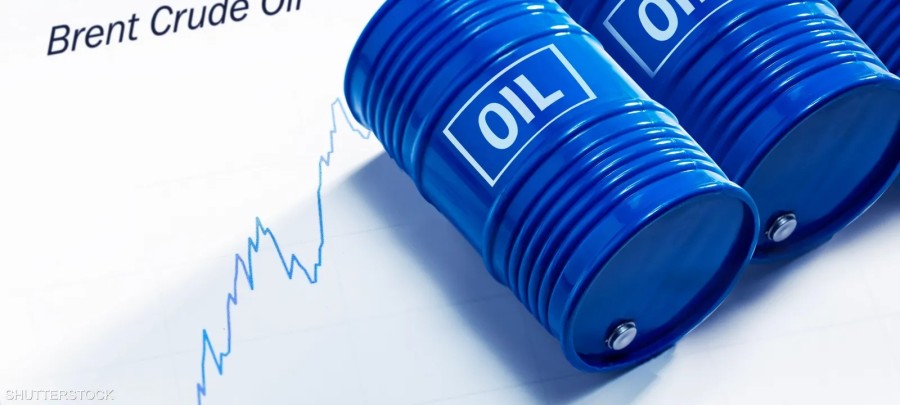


Oil prices fell after three days of gains, after Israel and Lebanon agreed to a ceasefire if Hezbollah also stopped hostilities, removing a key sticking point in talks between Washington and Tehran.
Brent crude fell to around $97 a barrel, while West Texas Intermediate was near $96, after adding nearly 10% in the first three sessions of the week. The deal is contingent on a complete ceasefire by the Iranian-backed Hezbollah, according to a statement from both countries and the United States.
Washington-Tehran agreement
Washington and Tehran agreed on a rough framework to extend the truce for two months and reopen the Strait of Hormuz, but negotiations over the final details are still ongoing, and fighting has escalated.
The semi-official Tasnim news agency reported that the Islamic Republic's foreign minister clarified that no tangible progress had been made in the talks, and that Iran was prepared to target objectives inside Israel if its attacks on Beirut continued.
Oil prices erased last week's decline after renewed clashes dampened optimism about a deal to extend the current ceasefire and potentially resume flows through the Strait of Hormuz. As negotiations continue, global inventories are rapidly dwindling. U.S. government data released Wednesday showed that crude stockpiles at Cushing, Oklahoma, the delivery point for West Texas Intermediate crude, fell for the sixth consecutive week to near the minimum operating level.
Oil price forecasts
Although the ceasefire between Israel and Lebanon may reduce upside risks to prices in the near term, as long as the Strait of Hormuz remains closed, Brent crude is likely to jump to as high as $130 a barrel in the fourth quarter as global inventories tighten, according to Robert Rennie, head of commodities research at Westpac Banking Corp. He added: “The market is asleep at the wheel, even as we rapidly move toward an aggressive tightening in the crude and product markets.”
US President Donald Trump said the Strait of Hormuz would reopen immediately upon Iran signing a memorandum of understanding to cease armed hostilities, provided certain areas, including mines, were cleared. He downplayed the threat posed by mines in the strait to commercial shipping.
The main focus of the oil market remains on the key waterway through which a fifth of the world's crude oil typically passes. The virtual paralysis of this chokepoint, under a dual blockade from Tehran and Washington, has led to soaring fuel prices, as shipping traffic remains restricted.
Meanwhile, the Republican-led House of Representatives voted to end the U.S. war with Iran, showing that concerns about the conflict are spreading within the president's own party five months before the midterm elections.
This move will not end U.S. military attacks on the Islamic Republic, as the Senate still needs to pass the resolution, and the provisions in the 1973 War Powers Act on which the House of Representatives based its decision are legally controversial anyway.