


































The Bank of Japan is widely expected to raise its benchmark interest rate to its highest level since 1995, during its first regular monetary policy meeting held without the governor present.
According to a Bloomberg survey, most observers of the Bank of Japan expect policymakers to raise the benchmark interest rate by a quarter of a percentage point to 1 percent at the conclusion of the two-day meeting on Tuesday.
First Bank of Japan meeting without Governor Ueda
The Bank of Japan said Governor Kazuo Ueda, who was hospitalized in recent days for treatment of an infection caused by a liver cyst, will present his views to the board in writing, but will not participate in the vote.
The expected hike represents the first increase in interest rates since December, and comes at a time when policymakers face increasing risks of rising inflation as a result of the ongoing conflict in the Middle East, even as signs emerge that an agreement to end the war is near.
Markets will also be watching for any signs of how quickly the bank will take further steps, with traders wary of possible intervention by authorities to support the yen if it weakens further after the meeting.
The Bank of Japan said Deputy Governor Shinichi Uchida would hold the press conference after the meeting instead of Ueda.
Investors will be watching to see if the veteran banker, seen as one of the architects of the bank’s monetary policy framework over the past two decades, speaks more clearly than the former academic governor, known for his highly cautious and precise style.
The Bank of Japan will have to strike a delicate balance between its monetary policy statement and Uchida's press conference.
The central bank faces a real dilemma: it must avoid provoking Prime Minister Sanae Takaichi's government, which has become more sensitive to the risks of an early tightening of monetary policy, while at the same time convincing investors that it is not slow to respond to rising inflation risks and a weak yen, according to Shigeto Nagai, former head of the Bank of Japan's international department.
Bloomberg News quoted Nagai, who is currently head of Japan economics at Oxford Economics, as saying: “The Bank of Japan may at some point be forced to make a difficult choice between supporting domestic demand and preventing further depreciation of the yen.”
The United States and Iran had announced a preliminary agreement to reopen the Strait of Hormuz, with the formal signing expected next Friday in Switzerland, indicating that some details of the agreement were still being finalized. However, market pricing in Japan on Monday reflected near certainty that the Bank of Japan would proceed with raising interest rates.
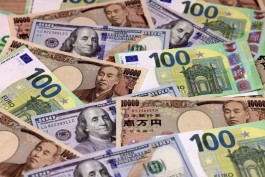
Despite record interventions to support the currency, the yen continues to trade near 160 yen to the dollar, a level that previously prompted authorities to intervene in the markets. A weaker currency exacerbates inflationary pressures for a resource-importing economy like Japan.
Is curry powder making a strong comeback to the markets?
Speculators also raised their bets against the yen to a nine-year high, signaling a return to the carry trade strategy on the yen, despite the risks of government intervention and the possibility of an interest rate hike by the Bank of Japan.
Carry trade is an investment method based on:
- Borrowing in a low-interest currency
- Then invest the money in higher-yielding assets or currencies to realize the interest difference as profit.
Pressure is also mounting from abroad; last week the European Central Bank became the first major central bank to raise interest rates since the outbreak of the US-Iran conflict, while traders see increasing likelihood that the US Federal Reserve will tighten monetary policy before the end of the year.
In this context, it has become difficult for the Bank of Japan to adopt an accommodative tone without further pressuring the yen. Even if interest rates were raised to 1 percent, Japanese interest rates would remain among the lowest in the developed world.
Taro Kimura of Bloomberg Economics said: “With other major central banks moving towards raising interest rates, interest rate differentials could once again become a major driver of yen weakness, as they did in 2022, increasing the risk of higher inflation.”
During the April meeting, Ueda faced three dissenting voices calling for an interest rate hike, the biggest split within the council since he took office.
Since then, two members of the monetary policymakers have expressed support for further increases, while Ueda, in his last public appearance before the June meeting, hinted that there was a strong possibility of taking this step.
Investors will also be watching to see if any members of the Monetary Policy Committee oppose raising interest rates. Toichiro Asada, the first member nominated by Takaichi to the committee, may be inclined to support a more accommodative policy, in line with the prime minister's stance.
Among the arguments against raising interest rates in June is the slowdown in inflation data, which remains below the bank's 2 percent target, partly due to government support.
However, the Bank of Japan expects inflation to accelerate later this year as the impact of rising energy costs stemming from the Middle East conflict spreads to the economy. Ueda had previously indicated that consumer price growth could exceed 3 percent during the current fiscal year.
Investors also expect inflation to accelerate; the 10-year underlying inflation rate rose to a record high of 2.35 percent last month and has remained close to that level as oil prices have risen and the yen has weakened, an indicator that reflects bond investors' expectations for average consumer price growth over the next decade.
The program to reduce bond purchases is another key focus of the meeting.
The central bank is currently reducing its purchases by 200 billion yen each quarter until March of next year.
This pace had already been halved last year due to concerns that withdrawing stimulus at a faster rate would destabilize the bond market. Despite these reductions, the Bank of Japan still holds roughly half of the outstanding government debt, more than a decade after its massive asset purchases.
The yield on Japan's 10-year bonds rose to its highest level since 1996 in May, reflecting the significant market volatility this year. Earlier this month, Ueda stated that policymakers would consider improving market efficiency and stability when reviewing future bond-buying plans.
Bloomberg quoted sources as saying that officials may discuss slowing the pace of purchase reductions further or even temporarily suspending the process as bond market conditions improve.
Nobuyasu Atago, chief economist at the Rakuten Institute of Economic Research and a former Bank of Japan official, said: The key question is how the Bank of Japan will formulate its bond-buying strategy without raising concerns about the bond market or giving the impression that it is subject to the fiscal considerations of the Takaichi government.