




















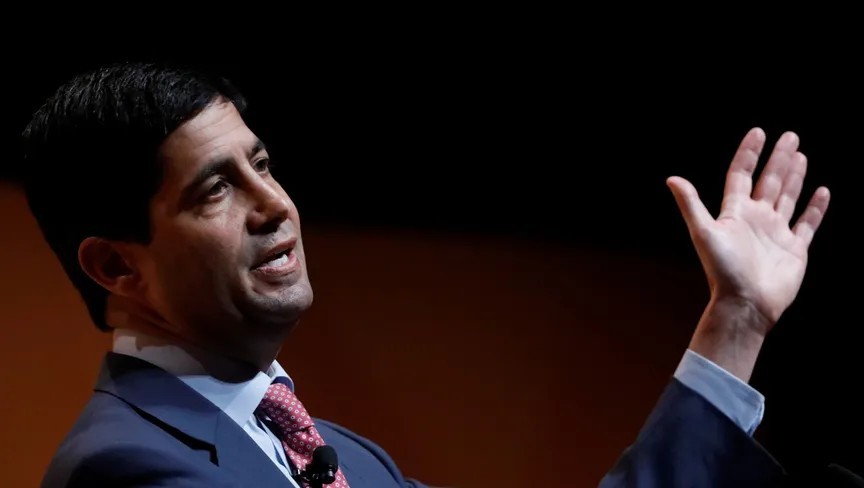


Investors around the world are focused on the US Federal Reserve meeting tomorrow, in what could be the most important event for financial markets since the beginning of 2026. Although expectations are almost unanimous that interest rates will remain unchanged within the 3.50%-3.75% range, the decision itself is not the most important element. Rather, attention will be focused on the accompanying statement, the updated economic forecasts, and the press conference of Federal Reserve Chairman Kevin Warsh, who is facing his first real test at the head of the world's most influential central bank.
Over the past few months, markets have found themselves facing a more complex economic environment than anticipated at the beginning of the year. After a period of gradual decline, inflationary pressures have resurfaced, pushing the annual inflation rate up to approximately 4.2%, fueled by rising energy prices and persistent bottlenecks in global supply chains. Conversely, the US labor market continues to demonstrate remarkable resilience, with job creation ongoing and the unemployment rate remaining near 4.3%.
precise equation
These data present monetary policymakers with a delicate equation: how to maintain progress in combating inflation without causing a sharp economic slowdown? The Fed does not want to give markets the impression that it is preparing to cut interest rates quickly, nor does it want to close the door on the possibility of taking more stringent measures if inflationary pressures accelerate again.
But what makes this meeting exceptional is not only that it is the first under Kevin Warsh's leadership, but also that it comes at a time of radical shift in investor expectations. Just a few months ago, markets were betting on a series of interest rate cuts throughout 2026, but today these expectations have declined significantly, with some investment institutions beginning to talk about the possibility of interest rates remaining high throughout the year, and even the possibility of raising them again if inflationary pressures continue to rise.
The meeting also comes amid a challenging global environment, with geopolitical tensions still casting a shadow over energy markets and global trade, while major governments continue to post record levels of public debt and fiscal spending, factors that could keep inflation above target for longer than markets previously expected.
Therefore, investors will focus on four key points:
First , the Federal Reserve's assessment of the inflation trajectory. If the Fed indicates that progress in reducing inflation has slowed or become more fragile, markets may interpret this as a signal that tight monetary policy will continue for a longer period. Conversely, if the Fed expresses greater comfort with price developments, bets on interest rate cuts may resurface.
Second , the new economic forecasts will reveal how policymakers view the future of economic growth, inflation, and unemployment in the coming years. Any downward revision of growth forecasts or upward revision of unemployment forecasts could be interpreted as paving the way for a more accommodative monetary policy in the future, while an upward revision of inflation forecasts could lead to a complete repricing of the path of interest rates.
Third , there is what is known as the future path of interest rates, or the dot plot. This tool is doubly important this time because it represents the first official map of monetary policy direction under Warsh's leadership. Often, the impact of these projections is greater than that of the interest rate decision itself, because it gives investors a direct view of how Federal Reserve members are thinking about the coming years.
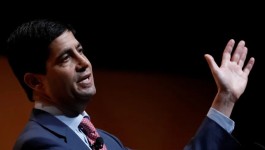
The fourth and most important point is the press conference of the Federal Reserve Chairman. Kevin Warsh understands that the markets are not just looking for an explanation of the current decision, but are trying to understand his entire philosophy of managing monetary policy.
Warsh is considered one of the most interesting Federal Reserve chairmen in years. He served on the Fed's Board of Governors from 2006 to 2011 during the global financial crisis and was a key figure in managing that historic period. He later became known for his frequent criticisms of excessive central bank balance sheets and the heavy use of accommodative monetary policies, warning of the risks of distorting asset pricing and creating financial bubbles in the long run.
Ironically, Warsh assumed the chairmanship of the Federal Reserve as a candidate widely believed to be more inclined to lower interest rates than his predecessor, Jerome Powell. However, the economic realities he inherited may compel him to adopt a more hawkish stance than anticipated. The return of inflation above 4%, the continued strength of the labor market, and rising energy prices due to geopolitical tensions all mean that his first test will not be how to cut interest rates, but rather how to maintain the central bank's credibility in the face of renewed inflationary pressures.