




























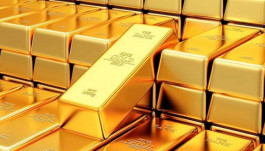






Gold prices held steady on Wednesday near their highest levels in a week, as details of the agreement between the United States and Iran began to emerge, while investors awaited the first monetary policy decision under the leadership of the new Federal Reserve Chairman Kevin Warsh.
This performance comes after a strong upward surge in the precious metal over the past few days, supported by the announcement of a preliminary agreement between the United States and Iran to end the war, which has reshaped investors' expectations regarding inflation and US interest rates.
The Washington-Tehran agreement eases inflationary pressures.
US President Donald Trump said the agreement with Iran includes guarantees that prevent Tehran from developing nuclear weapons, while a US official explained that the agreement allows Iran to resume selling oil in global markets.
The emergence of these details has strengthened expectations of a return of Iranian oil supplies to the markets, which has kept oil prices near their lowest levels in about 3 months.
The decline in oil prices helped to calm fears about global inflation, especially after months of sharp increases in energy prices as a result of the war and the closure of the Strait of Hormuz.
Lower oil prices are seen as a key factor in reducing pressure on central banks, as they decrease the likelihood of continued high inflation waves that prompted monetary authorities to adopt tight policies in the past.
All eyes are on the new Federal Reserve chairman's first real test
Ilya Spivak, head of global macroeconomics at Tasty Life, said that gold's upward momentum has begun to fade as markets shift their focus entirely to the Federal Reserve's anticipated monetary policy decision.
He added that investors are still uncertain about how the new Fed chairman will deal with a range of conflicting factors, including his well-known history of favoring hawkish policies, high inflation rates, and political pressure from the White House to adopt a more flexible monetary policy.
Markets are awaiting the release of the US Federal Reserve's updated economic projections later today, amid expectations that most monetary policymakers will see a need to keep short-term borrowing costs unchanged throughout the year.
Some estimates also suggest that a limited number of Federal Reserve members might support a further interest rate hike if signs of entrenched inflation emerge within the US economy.
Declining expectations of an interest rate hike are supporting the precious metal.
Data from the US Interest Rate Monitoring Tool on Investing Saudi Arabia showed that traders reduced their bets on a US interest rate hike in December to 59%, compared to about 70% last week before the announcement of the peace agreement between the United States and Iran.
This shift reflects a growing conviction that declining geopolitical risks and lower oil prices may reduce the need for further tightening of US monetary policy.
Gold typically comes under pressure when interest rates rise, as it is an asset that does not generate periodic returns like bonds or deposits, making it relatively more expensive to hold in a high-interest-rate environment. However, reduced expectations of monetary tightening are providing additional support for the precious metal, especially given the continued uncertainty surrounding the global economy and the future of geopolitical relations.
Central banks and Asian demand continue to support gold.
Despite the current anticipation of the Federal Reserve's decision, Westpac Bank analysts believe that the long-term supporting factors for gold remain in place.
They explained in a research note that strong demand from Asian markets, along with continued purchases by central banks around the world, provide ongoing structural support for the precious metal.
They pointed out that gold remains an important hedging tool against geopolitical risks and economic policy volatility, which enhances its appeal to both investors and official institutions.
Gold now
Gold settled at $4,328.48 an ounce in spot trading, after hitting a one-week high of $4,370.82 an ounce on Monday.
In contrast, gold futures for August delivery fell 0.1% to $4,348.20 an ounce.
Performance of other precious metals
As for other precious metals, silver prices rose by 0.2% to $70.32 per ounce.
In contrast, platinum fell 0.9% to $1,787.87 an ounce.
Palladium also fell by 0.5% to $1,344.46 an ounce.
These moves indicate continued caution in the metals markets, as investors await the outcome of the Federal Reserve's decisions and the implementation of the US-Iran agreement in the coming days.